Introduction
Healthcare IT teams operate in one of the most demanding technology environments in any industry. Clinical staff rely on dozens of interconnected systems daily - from electronic health records (EHRs) to medical imaging platforms and connected medical devices - and when those systems fail or respond slowly, the impact reaches patients, not just IT queues. A retrospective analysis of hospital downtime events found that 76% of EHR outages resulted in clinical care disruptions, with 96.1% of downtime events occurring without warning.
Healthcare IT departments are also contending with pressure from two directions simultaneously. Cybersecurity threats continue to escalate - 2024 saw 742 large healthcare data breaches affecting more than 289 million individuals, nearly 85% of the U.S. population.
Regulatory requirements like HIPAA and HITECH compound that pressure, demanding continuous compliance rather than point-in-time audits. The average cost of a healthcare data breach reached $7.42 million in 2025, the highest of any industry for the 14th consecutive year.
This guide covers ITSM best practices tailored to healthcare organizations - including how to reduce downtime, improve compliance posture, and free clinical staff to focus on care instead of workarounds.
Overview
- ITSM in healthcare structures how IT plans, delivers, and supports the services clinical and administrative staff depend on daily
- Legacy, siloed tools create blind spots - unified platforms give healthcare IT teams the operational visibility they need
- Key practices include standardizing incident and change management, optimizing EHR integration, automating routine tasks, and building IT-clinical collaboration models
- Embed cybersecurity into every ITSM layer - healthcare's volume and sophistication of attacks demands proactive monitoring and access governance
- Run regular maturity assessments and continuous improvement cycles to stay audit-ready - not just audit-reactive
Understanding ITSM in Healthcare: Context and Challenges
Healthcare organizations run on IT - and when that IT fails, the consequences extend beyond downtime. ITSM in healthcare covers the structured policies, processes, and tools used to plan, deliver, manage, and improve IT services across hospitals, clinics, and health systems. This covers EHR uptime, clinical device support, help desk operations, and change management workflows.
Why Healthcare ITSM Is Uniquely Complex
Healthcare IT combines several factors that make ITSM more challenging than in most other sectors:
- 24/7 operational requirements with no maintenance windows that don't affect patient care
- High-consequence environment where downtime directly impacts patient safety
- Strict regulatory mandates including HIPAA, HITECH, and state-specific privacy laws
- Sprawling technology ecosystem mixing legacy systems with modern clinical applications
Clinicians access an average of 10 different applications daily, with nurses logging into systems up to 70 times per shift. Healthcare staff waste an average of 45 minutes per shift dealing with login issues alone - time that could otherwise be spent on patient care.
Common Pain Points Healthcare IT Teams Report
Fragmented Legacy Tools
The Fixify 2026 IT Help Desk Benchmark Report found that healthcare organizations employ a median of just 1.1 IT and security staff per 100 employees. These lean teams often manage distinct tools for ticketing, asset tracking, and change management with no single source of truth.
When incident data lives in one system, asset information in another, and change requests in a third, IT teams lack the enterprise-wide visibility needed to identify patterns or prevent recurring issues.
Technical Debt and End-of-Life Systems
Research from Deloitte found that 96% of hospitals operate end-of-life systems, regardless of size. This technical debt drives significant IT costs and creates security vulnerabilities. Compounding the problem, 63% of healthcare organizations rely on legacy systems to a moderate or high degree, and 75% identify these systems as barriers to cloud efficiency.
Reactive-Only Incident Response
Without formal ITSM processes, many healthcare IT teams operate in perpetual firefighting mode. Help desk tickets accumulate without proper prioritization, critical incidents aren't distinguished from routine requests, and manual workarounds pile up as technical debt. The Fixify study found that 35.3% of healthcare help desk tickets are classified as productivity-blocking, yet many organizations lack documented workflows for routing and resolving these critical issues.
ITSM Best Practices for Healthcare Organizations
Effective healthcare ITSM requires purpose-built practices that align IT operations with patient care goals. Generic IT frameworks, applied without adaptation, consistently fall short in clinical environments where the stakes are higher and workflows are more complex.
Standardize Incident and Change Management Processes
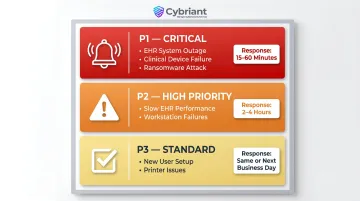
Healthcare IT teams need formal, documented workflows for classifying, routing, and resolving incidents. Critical incidents must be distinguished from lower-priority issues with clear severity definitions:
- P1 Critical (EHR outage, clinical device failure, ransomware attack): 15-60 minute response time
- P2 High (slow EHR performance, workstation failures): 2-4 hour response time
- P3 Standard (new user setup, printer issues): same or next business day
Each priority tier should have defined SLA targets that are tracked and reported. Research shows that between 2016 and 2021, 374 ransomware attacks on U.S. healthcare organizations caused operational disruption in 44.4% of cases, with a mean disruption duration of 15.8 days.
Change Management in Healthcare
Change management carries higher risk in healthcare than in most industries. An unplanned update to a clinical system can disrupt care workflows during patient treatment. All changes must go through structured processes:
- Documented approval workflows with clinical stakeholder review
- Testing in non-production environments that mirror clinical configurations
- Rollback planning with clear criteria for when to abort
- Communication protocols that reach affected clinical staff before deployment
Optimize EHR Integration and Interoperability
EHR systems operating in silos create significant operational risk. When lab results, imaging systems, and patient management platforms cannot exchange data in real time, clinical staff lose time to manual reconciliation and error risk increases.
ONC research from 2023 found that while 70% of hospitals engaged in all four domains of interoperable exchange (send, receive, find, integrate), only 43% were "routinely interoperable." More concerning: although 71% of hospitals reported routine access to clinical information from outside providers, only 42% of clinicians routinely used that information during patient treatment.
Best Practices for EHR Integration:
- Ensure ITSM tools have connectors or APIs to major EHR platforms (Epic, Cerner, Meditech)
- Establish regular compatibility audits as EHR vendors release updates
- Assign ownership of integration health to a named role or team
- Monitor integration failure rates as a key ITSM metric
- Document integration dependencies in change management workflows
Implement Knowledge Management and Self-Service
Knowledge-centered service (KCS) reduces repeat ticket volume by documenting resolutions to common, recurring issues. Healthcare organizations that implemented self-service password reset solutions saw 30-40% reduction in help desk tickets.
Key Implementation Guidelines:
- Build knowledge base using clinical staff's language and workflows, not generic IT terminology
- Document solutions to the most common ticket categories: Identity & Access Management (17.1% of tickets), Software & Applications (21.2%), and Hardware issues (14.8%)
- Engage nurses, physicians, and administrative staff when curating knowledge articles
- Update articles as systems change - outdated knowledge erodes trust in self-service
- Track article usage metrics to identify gaps in coverage
Automate Routine IT Tasks to Free Clinical Bandwidth
Healthcare staff already face significant time pressure. Automation removes repetitive tasks that pull clinical staff away from patient care.
Strong Automation Candidates:
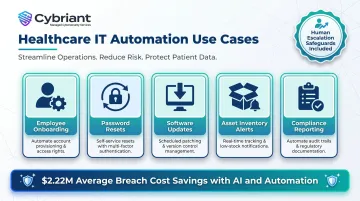
- New employee onboarding (system access provisioning, training scheduling)
- Password resets and account unlocks
- Software update deployments during off-hours
- Inventory replenishment alerts for IT assets
- Routine compliance reporting and audit log generation
Organizations that extensively used security AI and automation saved an average of $2.22 million in breach costs compared to those that did not. However, automation in healthcare must include safeguards: automated changes to clinical systems should always have exception triggers that escalate to human review, ensuring no automation silently disrupts a regulated workflow or access control policy.
Foster Structured IT-Clinical Collaboration
Those automation safeguards only work when IT teams understand clinical context well enough to set them correctly. That understanding requires structure. ITSM improvement initiatives frequently stall because IT and clinical teams operate without a shared language or governance forum - clinical staff don't know how to escalate effectively, and IT teams don't understand clinical workflows well enough to prioritize correctly.
A joint IT-clinical steering committee (or regular service review cadence) addresses this directly. Key elements of an effective collaboration structure:
- Review IT performance data (ticket volumes, resolution times, uptime metrics) alongside clinical feedback in the same forum
- Include representatives from nursing, physician groups, and administrative staff - not just IT leads
- Document clinical impact context for recurring incidents so prioritization reflects patient care risk
- Establish a shared escalation path that clinical staff can use without needing to know IT terminology
Regular touchpoints reveal what dashboards miss. Learning that "EHR slowness" during shift change creates patient handoff risks, for instance, changes how IT teams prioritize performance optimization work - and changes outcomes for patients.
Integrating Cybersecurity Into Your Healthcare ITSM Framework
Cybersecurity cannot be siloed from ITSM in healthcare. The 2024 spike in healthcare breaches was largely driven by the Change Healthcare ransomware attack, which affected an estimated 192.7 million individuals. Between 2018 and 2023, the industry saw a 239% increase in hacking-related breaches and a 278% increase in ransomware attacks.
ITSM Practices Most Directly Connected to Security Posture
Access Management
Ensuring terminated staff are promptly deprovisioned prevents unauthorized access. Healthcare organizations report that onboarding and offboarding activities constitute 32.6% of their ticket mix. Formal access management processes within ITSM should include:
- Automated deprovisioning triggers tied to HR systems
- Regular access reviews for privileged accounts
- Role-based access controls (RBAC) aligned to clinical workflows
- Emergency access procedures that maintain audit trails
Change Control
Unauthorized changes introduce vulnerabilities. Change management processes should include security review gates for changes affecting:
- Systems that store or process protected health information (PHI)
- Network segmentation and firewall rules
- Authentication mechanisms
- Integration points between clinical systems
Incident Response
Healthcare organizations need documented procedures for when a security event is detected, not just an IT outage. The global average time to identify and contain a breach was 258 days in 2024, with healthcare breaches typically taking 213 days before discovery.
Continuous Vulnerability Management Within ITSM
Healthcare organizations should conduct regular vulnerability scans of network infrastructure, clinical applications, and connected medical devices. Findings should feed directly into the change management process as prioritized remediation tasks, not live in a separate security backlog.
Best practice is to scan the full modern attack surface - not just traditional IT infrastructure, but also cloud environments, IoT devices, and medical equipment. Remediation should follow risk-based prioritization that considers both technical severity and potential impact on patient care.
24/7 Monitoring and Managed Security Services
Continuous vulnerability scanning only delivers value if someone is watching for threats around the clock. For most healthcare IT teams, that's the gap: 24/7 monitoring is now a baseline requirement, but internal staff rarely have the bandwidth to run a security operations function continuously. Building an internal SOC means:
- Staffing multiple full-time employees to maintain continuous coverage
- Recruiting and retaining specialized security expertise in a tight labor market
- Investing in enterprise-grade security tools and platforms
This is where a managed security services partner like Cybriant can extend ITSM capability without the overhead. Cybriant offers:
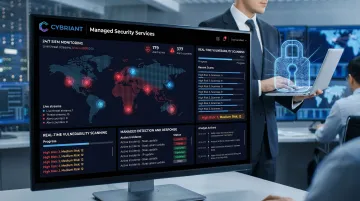
- 24/7 Managed SIEM with live threat monitoring
- Real-time vulnerability scanning with patch management
- Managed Detection and Response (MDR) services
Healthcare IT teams get immediate access to security experts and enterprise-grade tools at a fraction of the cost of in-house operations.
HIPAA-Specific ITSM Obligations
Risk assessments, audit controls, and access reporting aren't just security activities - they're ITSM process requirements under HIPAA. The Security Rule defines three safeguard categories that map directly to ITSM processes:
Administrative Safeguards:
- Security Management Process (risk analysis and management) → ITSM incident management and continual improvement
- Security Incident Procedures → ITSM incident response workflows
- Evaluation (periodic security reviews) → ITSM audit cycles
Technical Safeguards:
- Access Control → ITSM access management and identity processes
- Audit Controls → ITSM monitoring and logging
- Transmission Security → ITSM configuration management
Physical Safeguards:
- Facility Access Controls and Device/Media Controls → ITSM asset management
Integrate these requirements into regular ITSM review cycles so compliance is maintained continuously rather than assembled before an audit.
How to Evaluate and Evolve Your Healthcare ITSM Strategy
Start With a Current-State Assessment
Before selecting tools or expanding practices, audit your current state:
- Which processes are manual and repetitive?
- Where do ticket backlogs concentrate?
- How long do P1 incidents take to resolve, on average?
- Are change-related incidents tracked separately from unplanned outages?
- What percentage of your systems are end-of-life or approaching it?
The HIMSS Infrastructure Adoption Model (INFRAM) provides an eight-stage (Stage 0-7) evidence-based maturity framework. Stage 0 organizations lack formal security policies; Stage 7 represents advanced analytics and cybersecurity capabilities. This vendor-agnostic model provides guidance for infrastructure improvement and change management specific to healthcare.
Common ITSM Improvement Mistakes in Healthcare
Research shows that up to 70% of large health IT projects fail, with as few as one in eight considered truly successful. Understanding where these projects go wrong is the first step toward avoiding the same traps. Common failure patterns include:
The "Silver Bullet" Fallacy
Selecting a platform based on brand name rather than healthcare-specific fit, expecting the tool alone to solve process problems. Without process discipline and clinical stakeholder buy-in established first, even a well-regarded platform will fail to deliver results.
Insufficient Clinical Buy-In
Launching transformation without clinical and leadership engagement. IT-only initiatives that don't account for clinical workflows face resistance and low adoption.
Treating Go-Live as the Finish Line
ITSM maturity is an ongoing process, not a deployment event. Organizations that stop after implementation miss the continuous improvement cycle that delivers long-term value.
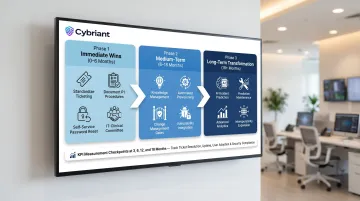
Build a Three-Horizon Roadmap
Knowing what fails helps clarify what works. Successful ITSM evolution follows a staged approach, with each phase building on the last:
Immediate Wins (0-6 months):
- Standardize ticketing categories and SLA definitions
- Document P1 incident response procedures
- Implement self-service password reset
- Establish IT-clinical steering committee
Medium-Term Improvements (6-18 months):
- Deploy knowledge management and expand self-service
- Automate routine provisioning and deprovisioning
- Implement formal change management with clinical review gates
- Integrate vulnerability management into change workflows
Long-Term Transformation (18+ months):
- AI-assisted incident prediction based on historical patterns
- Predictive maintenance of medical equipment
- Advanced analytics for capacity planning
- Expanded interoperability with external health information exchanges
Each stage should have measurable KPIs tied to both IT performance and patient care outcomes: not just technical metrics like ticket resolution time, but also clinical indicators like time saved per shift or reduction in care disruptions.
Conclusion
Healthcare organizations that treat ITSM as a strategic capability - not just a helpdesk function - are better positioned to reduce operational risk, meet regulatory requirements, and give clinical staff the reliable, secure IT environment they need to focus on patients. The stakes are too high to approach ITSM as an afterthought: downtime disrupts care, breaches cost millions, and inefficient IT steals time from an already overstretched clinical workforce.
Cybersecurity is not optional within this framework. Healthcare's threat landscape - with breach costs averaging $7.42 million and ransomware attacks increasing 278% between 2018 and 2023 - makes proactive monitoring, access governance, and vulnerability management integral parts of any mature ITSM program.
For healthcare organizations that need to strengthen the security layer of their ITSM strategy without building an internal SOC, Cybriant provides managed cybersecurity services - 24/7 SIEM monitoring, Managed Detection and Response, and real-time vulnerability management - scaled to fit organizations of all sizes. Contact Cybriant at 844-411-0404 to identify and close the gaps in your current IT security posture.
Frequently Asked Questions
What is an IT service management system?
An ITSM system is a set of tools and processes used to plan, deliver, manage, and improve IT services across an organization - covering incident management, change requests, asset tracking, and service desk functions. In healthcare, these systems must also support compliance requirements like HIPAA audit trails and maintain the 24/7 uptime demands of clinical operations.
What are the 5 stages of ITSM?
The five stages come from ITIL v3: Service Strategy, Service Design, Service Transition, Service Operation, and Continual Service Improvement. Healthcare organizations apply each stage with added weight on patient safety, regulatory compliance, and clinical workflow integration.
What are the 4 dimensions of IT service management?
ITIL 4 defines four dimensions: Organizations and People, Information and Technology, Partners and Suppliers, and Value Streams and Processes. All four must work in concert - neglecting any one creates gaps that in healthcare can directly affect system availability and patient safety.
What are the 4 P's of service management?
The 4 P's are People, Processes, Products, and Partners. In healthcare, the People component often determines adoption success - clinical staff who don't trust or understand ITSM tools will work around them, creating the exact process gaps ITSM is designed to close.
How does ITSM help healthcare organizations comply with HIPAA?
ITSM supports HIPAA compliance through access control management (ensuring only authorized users access PHI), audit trail documentation (logging who accessed what information and when), change control processes (preventing unauthorized system modifications), and incident response procedures (detecting and containing security events). These capabilities map directly to HIPAA's administrative, technical, and physical safeguard requirements.
What is the difference between ITSM and ITIL in healthcare?
ITSM is the broader practice of managing IT services - the strategic approach organizations use to design, build, deliver, and manage IT services. ITIL (IT Infrastructure Library) is a specific prescriptive framework of best practices used to implement ITSM. Healthcare organizations commonly use ITIL as their guiding methodology but may also adapt it alongside NIST or HITRUST frameworks to address sector-specific security and compliance requirements.