Introduction
When a cyberattack strikes, organizations face two equally critical questions: "How do we stop this threat right now?" and "How did this happen in the first place?" Answering only one leads to incomplete protection.
DFIR (Digital Forensics and Incident Response) integrates digital forensics - evidence collection and analysis - with incident response: detection, containment, and recovery. Practiced together, these disciplines ensure that while you're stopping an active threat, you're also preserving the evidence needed to understand it, close the vulnerabilities that enabled it, and prevent a repeat.
Despite this critical need, 77% of organizations lack a formal cybersecurity incident response plan applied consistently across the enterprise. Even fewer have integrated forensic capabilities into their response workflows. The consequences are predictable:
- Breaches get contained without identifying the root cause
- Critical evidence gets destroyed during rapid response
- The same attackers return through the same vulnerabilities
This article is written for IT managers, security leaders, and business owners at organizations of any size who have heard DFIR referenced but need to understand what it means operationally, why it matters, and how to apply it correctly.
Overview
- DFIR merges evidence collection with threat containment into one coordinated process, not two separate activities
- Digital forensics answers "what happened?" while incident response answers "how do we stop it?" - treating them separately weakens both
- Six structured phases guide the process, with forensic evidence collected at each stage to preserve investigative integrity
- Organizations that skip forensics during containment risk repeat breaches costing $1.14 million more than fast, evidence-preserving responses
- Most SMBs and mid-market firms lack in-house DFIR expertise, which is why managed security providers have become the default option
What Is DFIR?
DFIR combines two complementary cybersecurity disciplines into a single, continuous workflow:
Digital forensics covers the collection, preservation, and analysis of digital evidence from devices, networks, and systems - reconstructing exactly what happened during a security incident. It answers questions like: What was the attacker's entry point? What data was accessed or exfiltrated? What tools did they use?
Incident response is the structured methodology for detecting, containing, and recovering from cyberattacks in real time. It focuses on stopping the threat, isolating affected systems, removing malicious components, and restoring normal operations as quickly as possible.
Together, these two functions give organizations the ability to:
- Stop an active threat immediately
- Understand exactly how the attack occurred
- Preserve evidence systematically for legal, regulatory, or insurance use
- Close the vulnerabilities that made the attack possible
- Ensure one activity (rapid containment) doesn't interfere with the other (evidence preservation)
How DFIR Differs from Standard Incident Response
A traditional IR team prioritizes speed and containment above all else. When a breach is detected, the focus is on isolating systems, wiping malware, and restoring services - often as quickly as possible. The problem? These containment actions frequently destroy critical forensic evidence before investigators can collect it.
For example, restarting a compromised server clears volatile memory (RAM) - wiping active network connections, running processes, and encryption keys. Reimaging a workstation erases filesystem artifacts that reveal how the attacker moved laterally.
DFIR-integrated teams prevent this evidence loss by:
- Following preservation protocols before taking containment actions
- Creating forensic copies of affected systems prior to remediation
- Maintaining chain-of-custody documentation throughout the response
Why DFIR Matters in Cybersecurity
The Evidence Destruction Problem
When incident response and digital forensics operate separately, critical volatile evidence - data in RAM, active network sessions, real-time logs - is often destroyed during containment before investigators can collect it. DFIR prevents this loss by running both processes in parallel, with forensic evidence preserved systematically even during rapid response actions.
Volatile data exists only in live memory and disappears the moment a system restarts or powers down. Without immediate collection, security teams lose visibility into:
- Active malware processes and their command-and-control communications
- Unencrypted credentials or session tokens held in memory
- Network connections showing lateral movement across the environment
- In-memory artifacts that never touch disk and leave no filesystem trace
The Cost of Incomplete Investigations
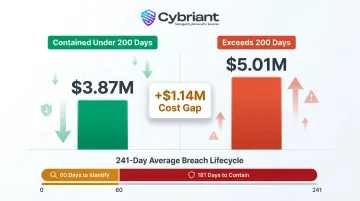
According to IBM's Cost of a Data Breach Report 2025, breaches with lifecycles exceeding 200 days cost organizations $5.01 million on average, compared to $3.87 million for those contained in under 200 days - a $1.14 million cost gap directly tied to response speed. The average breach now takes 241 days to identify and contain (60 days to identify, 181 days to contain), the lowest in nine years but still long enough for significant damage.
Organizations that contain threats without forensic investigation face a more dangerous risk: repeat breaches from the same attacker or vulnerability. Cybereason research found approximately 80% of ransomware victims who paid the ransom were attacked again, often by the same threat actor.
Without forensic analysis to identify the initial access vector, backdoors, and compromised credentials, attackers simply return through the same entry points that were never found - let alone closed.
Compliance and Legal Requirements
Many regulatory frameworks explicitly or implicitly require forensic investigation and breach reporting:
| Regulation | Core Requirement |
|---|---|
| HIPAA | Covered entities must conduct risk assessments to determine breach scope and notify individuals of unsecured PHI exposure |
| PCI-DSS | Payment brands may require independent forensic investigation by a PCI Forensic Investigator when cardholder data breach is suspected |
| SEC Rules | Public companies must disclose material cybersecurity incidents on Form 8-K within four business days, describing "nature, scope, and timing" |
| GDPR | Controllers must notify supervisory authorities within 72 hours and document facts, effects, and remedial actions |
Without DFIR, organizations cannot fulfill these obligations. You cannot describe the "scope and timing" of an SEC-reportable incident without forensic analysis. You cannot identify "affected individuals" for HIPAA notification without evidence showing what data was accessed.
Connecticut's proposed SB 1060 would go further, requiring companies to submit forensic reports to the Attorney General identifying root causes and documenting cyber vulnerabilities - moving forensic investigation from best practice to legal mandate.
Litigation and Law Enforcement Use Cases
Forensic evidence collected under proper chain-of-custody protocols supports multiple downstream needs:
- Criminal prosecution of cybercriminals and insider threats
- Insurance claims following a breach, where insurers require documented proof of the incident and response actions taken
- Civil litigation when breaches involve third-party negligence or contractual disputes
- Internal disciplinary actions against employees who violated policies or enabled compromise
Evidence that isn't collected properly - or at all - cannot support any of these uses.
The Proactive Feedback Loop
DFIR activates after incidents occur, but the intelligence it generates feeds directly back into an organization's defenses. Each investigation produces actionable inputs:
- Detection rules updated based on attacker tactics, techniques, and procedures (TTPs) observed
- Incident response playbooks refined with lessons learned from real events
- Vulnerability remediation priorities adjusted based on what attackers actually exploited
- Security control gaps closed based on evidence showing where defenses failed
Over time, organizations that act on these findings shrink both their attack surface and their average containment window - measurably improving security posture with each incident resolved.
How the DFIR Process Works
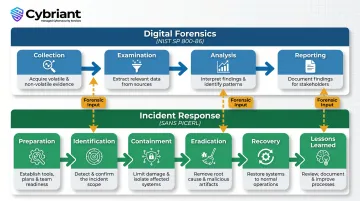
The DFIR process integrates two parallel tracks: the four-step digital forensics workflow (Collection, Examination, Analysis, Reporting, as outlined in NIST SP 800-86) and the six-phase incident response lifecycle from SANS Institute's PICERL framework (Preparation, Identification, Containment, Eradication, Recovery, Lessons Learned). These tracks are interdependent, with forensic activities feeding directly into response decisions in real time.
The process typically begins with triggers such as:
- SIEM alerts indicating suspicious activity
- EDR detections of malware or unusual behavior
- Employee reports of system anomalies
- External threat intelligence indicating active compromise
- Notifications from law enforcement or security researchers
Step 1: Preparation and Baseline Establishment
DFIR readiness begins before any incident occurs. Preparation includes:
- Documenting system baselines - knowing what "normal" looks like across your environment
- Establishing logging and monitoring coverage - ensuring logs are collected, retained, and accessible from all critical systems
- Assembling and training a DFIR team or selecting an external DFIR provider with pre-negotiated response terms
- Building incident response playbooks - documented procedures for common incident types
- Deploying and testing forensic tools - ensuring EDR, memory imaging, and network capture tools are ready for immediate activation
Organizations that skip preparation face significantly longer response times and incomplete investigations. Only 34% of small businesses have formal incident response plans, and 52% rely on untrained internal staff for cybersecurity - a readiness gap that weakens DFIR effectiveness.
Step 2: Identification and Evidence Preservation
Once an incident is suspected, the team must:
- Confirm the breach and assess its nature and scope
- Immediately preserve volatile evidence before any containment action alters the environment
Order matters here. Containment steps like isolating a device or shutting down a server can destroy data that exists only in live memory. The DFIR team must capture that evidence first:
- Memory (RAM) contents from compromised systems
- Active network connections and session data
- Running processes and their command-line arguments
- Real-time logs before they rotate or are overwritten
Cybriant's 24/7 Managed SIEM provides the continuous detection and log aggregation foundation that accelerates this phase, monitoring firewall, IDS, anti-virus, and operating system logs in real time to identify incidents as they unfold.
Step 3: Containment and Forensic Collection
Containment (isolating affected systems to stop threat spread) and forensic collection (imaging drives, capturing network traffic, extracting logs) must happen simultaneously. The DFIR team:
- Creates forensic copies of evidence before making system changes
- Documents chain of custody for all collected evidence
- Isolates compromised systems without destroying evidence
- Preserves the original state for analysis while containment proceeds
Tools like SentinelOne - deployed in Cybriant's managed EDR services - provide forensic endpoint data and can isolate threats while maintaining access to forensic artifacts, reducing the time analysts spend reconstructing attacker activity.
Step 4: Eradication and Deep Analysis
Once contained, the team removes malicious code, unauthorized access, and compromised components from the environment. In parallel, forensic analysts examine collected evidence to reconstruct the full attack timeline:
- Identifying the initial access vector (phishing email, exploited vulnerability, compromised credential)
- Mapping lateral movement paths showing how attackers spread across the network
- Documenting data exfiltration events and what information was stolen
- Cataloging attacker tools and techniques used during the compromise
Without this analysis, organizations fix the symptom but miss the underlying exposure - leaving the same entry point open for a follow-on attack.
Step 5: Recovery and Validation
The DFIR team restores systems to normal operations only after forensic analysis confirms the threat has been fully removed. That validation process includes:
- Validates that all infected systems are clean
- Patches vulnerabilities that were exploited
- Resets compromised credentials and rotates encryption keys
- Monitors restored systems for signs of residual activity
Skipping validation is one of the most common reasons organizations experience repeat compromises from the same threat actor.
Step 6: Post-Incident Review and Reporting
The process concludes with a formal report documenting:
- Full incident timeline and root cause
- Data affected and potential impact
- Response actions taken and their effectiveness
- Recommendations to prevent recurrence
This report serves internal leadership, legal teams, regulators, insurers, and law enforcement. It should directly update the organization's incident response playbooks and security controls based on lessons learned.
Key Factors That Affect DFIR Effectiveness
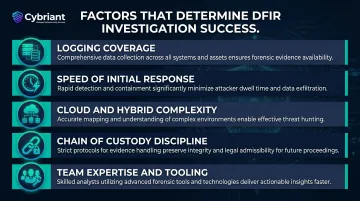
No two DFIR engagements unfold the same way, but the variables below consistently determine whether an investigation succeeds or stalls.
Logging coverage and quality: Organizations that don't collect logs from all endpoints, network devices, and cloud environments have major visibility gaps. Without comprehensive logs, investigators cannot establish reliable attack timelines or determine what data was accessed.
Speed of initial response: The longer an incident goes undetected, the more evidence degrades or is overwritten. Volatile data like RAM contents and active session records disappear when systems restart. IBM data shows that organizations with extensive security AI and automation saved 80 days in breach lifecycle time compared to those without.
Cloud and hybrid environment complexity: NISTIR 8006 identifies nine categories of forensic challenges in cloud environments, including difficulty accessing provider-managed infrastructure, ephemeral workloads that don't retain logs, and evidence distributed across multiple jurisdictions. Cloud-first organizations need specialized DFIR capabilities.
Chain of custody discipline: Forensic evidence not collected, handled, and documented according to established protocols may be inadmissible in legal proceedings - and could undermine an organization's ability to prosecute attackers or satisfy regulators.
Team expertise and tooling: DFIR requires specialists trained in both forensic methodology and incident response. Organizations lacking this combination, or the supporting tools like EDR platforms and forensic imaging software, face longer response times and risk missing critical evidence.
Addressing these factors before an incident occurs is what separates a contained breach from a prolonged, costly investigation.
Common Challenges and Misconceptions About DFIR
The Speed-Over-Evidence Trap
Many organizations assume that a fast containment response is automatically good DFIR. In reality, rushing to wipe or restore a system without forensic collection first may eliminate the only evidence of how the attacker got in, what they did, and whether they left backdoors behind.
Containment speed matters, but evidence preservation during containment matters more. Organizations that achieve both - those in IBM's sub-200-day breach lifecycle category - save over $1 million compared to those that rush blindly.
Three Consistent Execution Failures
1. Forensics treated as post-incident, not parallel - Teams run IR first, collect evidence later (if at all), and lose critical volatile data in the gap.
2. Zero preparation - Organizations have no IR plan, no forensic tooling, no pre-established DFIR protocols. The first time these processes run is during an active crisis when decision-making is worst.
3. Data volume overwhelms resources - Under-resourced teams face terabytes of logs, memory dumps, and network traffic with no methodology to prioritize analysis. Investigations drag on for months, root causes are never definitively identified, and the same vulnerabilities go unpatched.
DFIR vs. EDR: Discipline vs. Tool
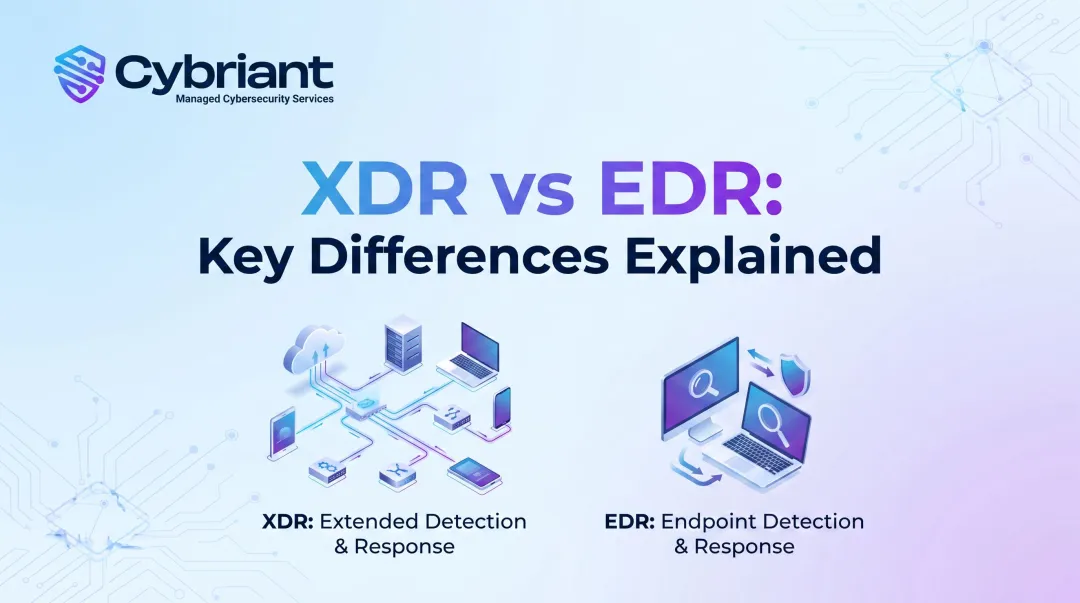
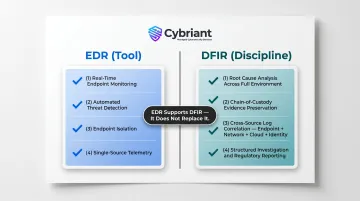
Confusing tools with disciplines is one of the most common gaps in execution. EDR (Endpoint Detection and Response) provides real-time endpoint monitoring, automated threat detection, and response capabilities - but it's a single tool, not a complete process.
DFIR is the broader discipline that uses EDR data alongside network logs, memory artifacts, and other sources. EDR supports DFIR; it does not replace it. An EDR platform can detect malware and isolate an endpoint automatically, but it cannot:
- Conduct root cause analysis across the full environment
- Preserve chain-of-custody evidence for legal use
- Correlate endpoint data with network, cloud, and identity logs
- Provide the structured investigation and reporting required by regulators
DFIR is the human-driven investigation, evidence handling, and remediation planning that tools cannot fully automate.
This is exactly the gap a managed DFIR provider fills: Cybriant pairs 24/7 Managed SIEM with hands-on forensic investigation, so the discipline, not just the tooling, is in place before an incident hits.
When Organizations Should Consider Outsourcing DFIR
The In-House Capability Gap
Building an effective in-house DFIR capability requires:
- Specialized personnel with dual expertise in forensic methodology and incident response
- A suite of forensic and monitoring tools (EDR, SIEM, memory imaging, network capture)
- 24/7 operational readiness to respond immediately when incidents occur
- Continuous training to keep pace with evolving attacker techniques
This resource level is beyond what most SMBs and even many mid-market enterprises can sustain. DFIR demand is unpredictable and spikes suddenly during crises, making it difficult to justify full-time staffing. Yet the consequences of inadequate DFIR - repeat breaches, regulatory penalties, uncontrolled incident costs - are severe.
The Retainer Model: Preparedness Without Overhead
Many organizations engage DFIR providers on retainer, ensuring immediate access to expert support when an incident occurs without the cost of maintaining a full-time in-house team. Retainer agreements typically cost $60,000 to $200,000 per year, compared to $500,000+ for emergency engagements during large-scale breaches.
Retainer models also typically include proactive services:
- Incident response plan reviews and updates
- Tabletop exercises to test response procedures
- Threat hunting to identify dormant compromises
- Annual assessments to validate forensic readiness
Cyber insurers increasingly require organizations to have DFIR retainers in place as a condition of coverage, recognizing that preparedness directly reduces claim severity.
Cybriant's Managed DFIR-Ready Services
Cybriant's managed cybersecurity services deliver DFIR readiness without requiring organizations to build the capability from scratch. The 24/7 Managed SIEM with live monitoring provides the continuous detection and log analysis foundation that makes investigations faster and more effective when incidents occur.
Cybriant's SOC 2 Type 2 certified managed services give businesses - regardless of size - the ongoing visibility and response capacity they need.
Cybriant's incident response capabilities cover the full breach lifecycle:
- Rapid containment to stop active threats
- In-depth forensic investigation across all affected hosts
- Root cause analysis to identify how the breach occurred
- Post-incident reporting with actionable recommendations to prevent recurrence
For organizations in healthcare, retail, hospitality, and manufacturing - industries where compliance requirements and attack frequency are both high - Cybriant's managed services offer a practical path to DFIR readiness that aligns with both operational needs and regulatory obligations.
Engaged ahead of an incident on a managed or retainer basis, that readiness costs a fraction of an emergency breach engagement, and it means expert help is already in place the moment you need it. Call 844-411-0404 to build DFIR readiness before an incident forces the question.
Frequently Asked Questions
What are DFIR services?
DFIR services give organizations forensic investigation and incident response capabilities delivered by external cybersecurity professionals. Delivery models include on-retainer engagements for rapid breach response and proactive services such as IR plan development, threat hunting, and tabletop exercises.
What are the 4 stages of incident response?
The four core phases are Identification, Containment, Eradication, and Recovery. Frameworks such as SANS PICERL and NIST SP 800-61 expand this to six phases by adding Preparation and Post-Incident Review.
What are the four basic steps to computer forensics?
NIST SP 800-86 defines four phases: Collection (gathering digital evidence from relevant sources), Examination (filtering and extracting relevant data), Analysis (interpreting evidence to reconstruct events and identify root causes), and Reporting (documenting findings for legal, regulatory, or internal use).
What is the difference between incident response and computer forensics?
Incident response prioritizes speed - stopping the attack and restoring operations. Computer forensics prioritizes evidence - collecting, preserving, and analyzing artifacts to reconstruct what happened and attribute responsibility. Running both together as DFIR ensures organizations can recover quickly without sacrificing the evidentiary record needed for legal or regulatory action.
What is the difference between DFIR and EDR?
EDR is a technology that monitors endpoints in real time and automates threat detection. DFIR is a broader discipline that draws on EDR data alongside network logs, memory artifacts, and other evidence sources - EDR supports the DFIR process but does not replace it.
What is cloud DFIR?
Cloud DFIR applies forensic investigation and incident response practices within cloud and hybrid environments (SaaS, IaaS, multi-cloud). Key challenges include limited access to provider-managed infrastructure, ephemeral workloads that don't retain logs, and evidence spread across multiple jurisdictions - nine categories documented in NISTIR 8006.