As organizations migrate critical workloads to AWS, Azure, and GCP, their attack surfaces expand in fundamentally new ways. Misconfigured IAM policies, over-privileged service accounts, exposed storage buckets, and insecure APIs replace the network perimeter threats of traditional IT. Gartner projects that 99% of cloud security failures will be the customer's fault, not the provider's - making proactive cloud security validation not optional, but critical.
This article explains what cloud penetration testing is, how it differs from traditional pen testing, which vulnerabilities it uncovers, the methodology security teams follow, and best practices for effective cloud security assessments.
Overview
- Cloud penetration testing simulates real-world attacks against cloud infrastructure to find exploitable vulnerabilities before attackers do
- Testing must account for the shared responsibility model, cloud-native services like IAM and serverless functions, and multi-cloud environments
- Common findings include misconfigured storage, excessive IAM permissions, exposed credentials, and insecure APIs
- Effective testing follows structured phases: reconnaissance, vulnerability assessment, exploitation, post-exploitation, and remediation reporting
- Validating modern cloud environments requires cloud-native security expertise, not general penetration testing skills alone
What Is Cloud Penetration Testing?
Cloud penetration testing is a systematic, authorized simulation of cyberattacks against cloud-based infrastructure - including IaaS, PaaS, and SaaS environments - to identify exploitable vulnerabilities before malicious actors do. Unlike vulnerability scanning, which uses automated tools to passively detect known weaknesses, penetration testing actively attempts to exploit those weaknesses to demonstrate real-world risk.
The distinction matters because of the shared responsibility model that governs cloud security. AWS, Azure, and GCP secure the underlying physical infrastructure, but customers are responsible for how they configure and deploy services on top of it.
According to the official AWS shared responsibility documentation, "Security and Compliance is a shared responsibility between AWS and the customer." Penetration testing falls directly within the customer's zone of responsibility - validating whether those configurations hold up under real attack conditions.
Modern cloud pen testing has evolved well beyond simple network scanning. Today's assessments must evaluate complex attack paths spanning:
- Containerized workloads and orchestration platforms like Kubernetes
- Serverless functions with ephemeral execution contexts
- IAM policies governing identity and access across hundreds of services
- Infrastructure-as-code templates that can propagate misconfigurations at scale
Each of these layers can harbor distinct vulnerabilities - and a misconfiguration in any one of them can become an entry point. That's why effective cloud pen testing requires professionals who know cloud-native architectures from the inside, not just how to run a network scanner.
Cloud Pen Testing vs. Traditional Penetration Testing
Traditional penetration testing focuses primarily on network perimeters, operating systems, and on-premises infrastructure. Security teams probe firewalls, scan for unpatched servers, and test application vulnerabilities within a relatively static environment.
Cloud pen testing addresses distinct attack surfaces:
API-Centric Architectures
Cloud services communicate through APIs rather than network protocols. Testers must evaluate API authorization, rate limiting, input validation, and authentication mechanisms - attack vectors that simply don't exist in traditional environments.
Identity as the Perimeter
In cloud environments, IAM structures define security boundaries. Privilege escalation paths, federated identity weaknesses, and role assumption chains become primary testing targets rather than network-layer exploits.
Provider Authorization Requirements
Cloud providers each maintain specific penetration testing policies defining permitted services and prohibited activities. AWS allows testing of most services without prior approval, but prohibits DNS zone walking and certain DoS testing types. Azure and GCP have similar frameworks. Traditional pen testing has no equivalent compliance requirement.
Dynamic Scale and Ephemeral Resources
Cloud environments auto-scale continuously, and misconfigurations can propagate rapidly through infrastructure-as-code templates. A vulnerability discovered today may have spread to 50 new instances by tomorrow - which is why point-in-time testing must be paired with continuous security validation.
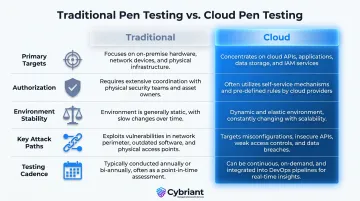
| Dimension | Traditional Pen Testing | Cloud Pen Testing |
|---|---|---|
| Primary Targets | Network perimeter, OS, applications | IAM, APIs, storage configs, container runtime |
| Authorization | Internal approval only | Must comply with provider policies (AWS/Azure/GCP) |
| Environment Stability | Static, predictable | Dynamic, auto-scaling, ephemeral |
| Key Attack Paths | Network exploitation, privilege escalation on hosts | IAM privilege escalation, metadata service exploitation, cross-account access |
| Testing Cadence | Annual or semi-annual | Continuous or event-triggered |
Common Cloud Vulnerabilities That Penetration Testing Reveals
Misconfigured Access Controls and Storage Buckets
Misconfigured permissions on cloud storage remain among the most common and damaging vulnerabilities. The Datadog 2024 State of Cloud Security Report found that 1.48% of AWS S3 buckets were effectively public - a small percentage that translates to millions of exposed buckets globally. Public exposure has led to major breaches affecting healthcare records, financial data, and government documents.
Cloud pen testers specifically probe:
- Bucket and container access control lists (ACLs)
- Cross-account access permissions and resource sharing policies
- Lifecycle policies that may inadvertently expose data
- Encryption settings and key management configurations
Over-Privileged IAM Roles and Credentials
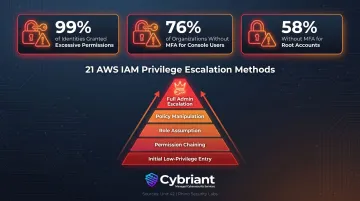
Excessive IAM permissions violate the principle of least privilege and create privilege escalation opportunities. Unit 42's analysis of 680,000+ identities across 18,000 cloud accounts found 99% of cloud users, roles, services, and resources were granted excessive permissions - permissions that went unused for 60+ days. 76% of organizations don't enforce MFA for console users, and 58% don't require it for root accounts.
Cloud penetration testing maps privilege escalation paths that automated compliance tools miss. Security researchers have documented 21 unique IAM privilege escalation methods in AWS alone, involving combinations of specific permissions that allow attackers to elevate from compromised low-privilege accounts to full administrative access.
Exposed or Weak Credentials in Code and Repositories
Credentials - API keys, access tokens, service account credentials - frequently get committed to public repositories or baked into container images. GitGuardian detected 23.8 million new hardcoded secrets on public GitHub in 2024, a 25% year-over-year increase.
Attackers continuously scan public repositories for exposed credentials, often exploiting them within minutes of publication. 70% of secrets leaked in 2022 remained active two years later - making detection and rotation a persistent gap. Penetration testers actively search for credential leakage across:
- Source code repositories (public and private)
- Environment variables in CI/CD pipelines
- Container image layers in registries like DockerHub (where GitGuardian found 7,000 valid AWS keys)
- Instance metadata services accessible through SSRF vulnerabilities
Insecure APIs and Compute Instance Metadata Exploitation
Cloud services communicate primarily through APIs, making API security critical. Weaknesses in API authorization, rate limiting, or input validation create significant attack vectors. The Capital One breach specifically exploited an SSRF vulnerability to query the EC2 instance metadata service and retrieve IAM credentials.
Cloud providers now offer enhanced metadata protections - AWS recommends IMDSv2, which requires a session token obtained through a PUT request before metadata queries. This token requirement defends against simple SSRF attacks that cannot set custom headers. Penetration testers validate whether these protections are actually enforced by checking:
- IMDSv2 enforcement across all EC2 instances (not just newly provisioned ones)
- API gateway authorization controls and rate-limiting configurations
- Input validation gaps that could enable SSRF or injection attacks
Supply Chain and Third-Party Integration Vulnerabilities
Modern cloud environments rely heavily on third-party marketplace components, container images, and SaaS integrations. Research published by Sysdig confirmed that container images have become a real attack vector, with malicious images distributed through public registries.
The January 2021 Codecov breach illustrated how far this risk extends. Attackers compromised a Bash Uploader script for over two months, exfiltrating credentials from approximately 29,000 enterprise customers before detection. Cloud pen testing specifically simulates these supply chain entry points - the external dependencies that internal security reviews rarely scrutinize.
How Cloud Penetration Testing Works: The Step-by-Step Process
Reconnaissance and Discovery
Testers begin by mapping the cloud attack surface, enumerating:
- Cloud accounts and regions actively in use
- Publicly exposed services and endpoints
- Shadow IT assets provisioned outside centralized management
- Inter-service dependencies and data flows
This phase uses both automated cloud enumeration tools and manual OSINT techniques. The goal is comprehensive visibility - gaps in that visibility become gaps in your security posture.
Vulnerability Assessment
Security teams systematically scan cloud resources for known vulnerabilities and configuration weaknesses:
- Analyze configurations against benchmarks (CIS, NIST)
- Review infrastructure-as-code templates for embedded weaknesses
- Evaluate IAM policy definitions for excessive permissions
- Identify deviations from security best practices
CIS Benchmarks provide prescriptive configuration guidelines for AWS, Azure, and GCP that serve as baseline validation criteria. Testers identify where actual deployments deviate from these standards.
Exploitation and Privilege Escalation
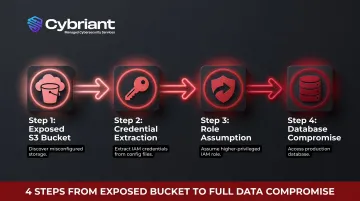
Testers attempt to exploit confirmed vulnerabilities, often chaining multiple lower-risk issues into significant compromise paths. For example:
- Discover an exposed S3 bucket containing configuration files
- Extract IAM credentials from those files
- Use credentials to assume a more privileged role
- Leverage that role to access production databases
That chain - four steps from an exposed bucket to production database access - is exactly the kind of path that risk scores alone don't capture. Testers specifically attempt privilege escalation within and across cloud services to show how an initial foothold translates to full account compromise.
Post-Exploitation and Impact Analysis
After gaining a foothold, testers evaluate:
- Persistence mechanisms that would allow continued access
- Lateral movement opportunities between cloud resources
- Potential data access or exfiltration scenarios
- Service disruption capabilities
This phase quantifies business risk with documented evidence. The finding isn't "misconfigured IAM policy" - it's "attacker can access all customer PII stored in the production database." That specificity is what drives remediation urgency.
Reporting and Remediation Guidance
Those documented findings feed directly into the final deliverable: a structured report that includes:
- Complete attack chains showing how vulnerabilities were exploited
- Risk-prioritized findings based on business impact
- Proof-of-concept evidence (screenshots, logs, extracted data samples)
- Specific remediation recommendations mapped to cloud provider native capabilities
- References to specific AWS, Azure, or GCP services and configurations that address each finding
If your cloud environment spans AWS, Azure, or GCP - or if you're not sure what your current attack surface looks like - Cybriant can scope and deliver a cloud penetration test tailored to your architecture. Talk to our team at 844-411-0404 or Contact Us.
Critical Areas of Focus in Modern Cloud Pen Testing
Identity and Access Management (IAM) Testing
Identity has become the primary security perimeter in cloud environments. IAM testing evaluates:
- Privilege escalation paths: Can a compromised low-privilege account assume roles or modify policies to gain administrative access?
- Federated identity weaknesses: Are SAML configurations, OAuth implementations, or identity provider integrations properly secured?
- MFA bypass techniques: Can attackers circumvent multi-factor authentication through session hijacking or policy gaps?
- Orphaned access rights: Do former employees, deleted services, or unused roles retain active permissions?
CrowdStrike found that valid account abuse accounted for 35% of cloud incidents as the leading initial access vector, highlighting why IAM security deserves priority focus.
Container and Serverless Security Testing
Cloud-native architectures require specialized testing approaches that go beyond traditional network-based assessments.
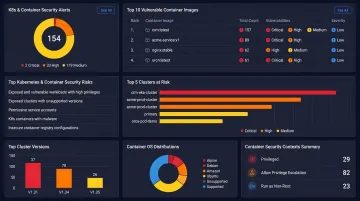
Container testing focuses on four core risks: runtime escape vulnerabilities that break container isolation, vulnerable dependencies in images, insecure registries with weak access controls, and misconfigured orchestration in Kubernetes clusters.
Red Hat's 2024 report found 89% of respondents experienced at least one Kubernetes security incident in the prior 12 months, with 45% citing misconfigurations as the top concern.
Serverless testing covers a different attack surface:
- Overly permissive execution roles and function permission boundaries
- Injection vulnerabilities in event triggers
- Isolation weaknesses in multi-tenant execution environments
- Exposed secrets in function configurations
Cloud Network and Storage Security
Cloud network security operates on software-defined controls rather than physical infrastructure, which changes both the attack surface and the testing approach:
Network controls under test include virtual network segmentation, security group and ACL rules, misconfigured load balancers exposing internal services, and VPC endpoint configurations.
Storage assessments validate access controls on buckets and containers, detect public exposure, review encryption and key management, and examine cross-account data sharing with access logging.
Infrastructure-as-Code (IaC) and CI/CD Pipeline Security
Testing security earlier in the development cycle - before code reaches production - catches misconfigurations when they're cheapest to fix:
IaC analysis scans Terraform, CloudFormation, and ARM templates for embedded misconfigurations, hard-coded credentials, and missing security guardrails in provisioning code.
Unit 42 found that 63% of production codebases contain unpatched high or critical vulnerabilities, and 83% of organizations have hard-coded credentials in source control.
CI/CD pipeline testing examines:
- Pipeline permissions and service account privileges
- Injection vulnerabilities in build scripts
- Artifact repositories for vulnerable dependencies
- Deployment approval workflows and segregation of duties
Multi-Cloud and Hybrid Environment Testing
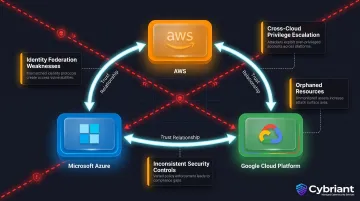
The shift from single-cloud to multi-cloud deployments introduces security gaps that no individual platform's native tools are designed to catch. Many organizations spanning AWS, Azure, and GCP simultaneously face:
- Identity federation weaknesses between cloud providers
- Inconsistent security controls across platforms
- Cross-cloud privilege escalation scenarios
- Orphaned resources that fall outside normal monitoring
A single misconfigured trust relationship between two cloud providers can give an attacker lateral movement across an entire environment - making cross-platform testing one of the highest-value assessments available.
Cloud Penetration Testing Best Practices
Define Clear Scope and Obtain Proper Authorization
Before testing begins:
- Establish which cloud services, accounts, and regions are in scope
- Follow each cloud provider's specific penetration testing policies
- Ensure all stakeholders - including legal, IT, and cloud provider contacts - are aligned
- Document authorization in writing
Unauthorized testing can violate cloud provider terms of service and expose your organization to legal liability. AWS, Azure, and GCP each publish policies that customers must follow before any testing begins.
Incorporate Testing Into a Continuous Security Strategy
Cloud environments change constantly through automation and self-service provisioning. A penetration test conducted today may not reflect the attack surface next quarter. Organizations should:
- Integrate security testing into DevSecOps pipelines
- Perform testing after significant infrastructure changes
- Combine point-in-time pen tests with continuous vulnerability management
Gartner's Continuous Threat Exposure Management (CTEM) framework advocates moving from traditional vulnerability management to broader, more dynamic continuous exposure validation. In practice, this means gaps identified during pen testing need to feed into an ongoing remediation cycle, not a one-time report.
Work With Experienced Cloud Security Specialists
Cloud penetration testing requires knowledge of:
- Cloud-native architectures and service-specific attack vectors
- IAM models and privilege escalation techniques across providers
- Container and serverless security testing methodologies
- Attacker techniques specific to cloud environments
Choosing the right partner is as important as the testing itself. When evaluating a cloud pen testing provider, look for:
- Demonstrated experience across major cloud platforms (AWS, Azure, GCP)
- A documented methodology aligned with industry frameworks (NIST SP 800-115, CIS Benchmarks)
- The ability to provide actionable remediation guidance - not just vulnerability lists
- SOC 2 Type 2 certification demonstrating adherence to security best practices
Frequently Asked Questions
What is cloud penetration testing?
Cloud penetration testing is a systematic, authorized simulation of cyberattacks against cloud infrastructure (IaaS, PaaS, SaaS) to identify and remediate security vulnerabilities before attackers can exploit them. Unlike passive scanning, it actively attempts exploitation to demonstrate real-world risk.
How do you perform cloud penetration testing?
Cloud pen testing follows structured phases: scoping and authorization, reconnaissance, vulnerability assessment, exploitation and privilege escalation, post-exploitation impact analysis, and remediation reporting. Each phase produces findings that feed directly into the next.
What is the difference between cloud security and penetration testing?
Cloud security covers the ongoing controls protecting your environment - firewalls, encryption, IAM policies, monitoring. Penetration testing is a time-bound, adversarial exercise that actively attempts exploitation to validate whether those controls hold up under real attack conditions.
Does AWS allow penetration testing?
Yes, AWS permits customers to conduct penetration testing on their own AWS infrastructure without prior approval for most services, provided testing adheres to AWS's penetration testing policy. Azure and GCP have similar policies allowing customer-managed testing within defined boundaries.
What does cloud-based testing mean?
Cloud-based testing refers to security assessments conducted against cloud-hosted infrastructure and services, evaluating cloud-specific risks such as misconfigured storage, IAM policy weaknesses, API vulnerabilities, and insecure serverless or containerized workloads. It addresses the unique attack surface created by cloud adoption.
Most cloud breaches trace back to misconfiguration, not sophisticated attacks - which is exactly what structured penetration testing is designed to catch. For organizations running workloads on AWS, Azure, or GCP, regular testing is the most direct way to verify your controls actually work before an attacker does.
Cybriant has been helping mid-market and enterprise organizations validate their security posture since 2015. Named to MSSP Alert's Top 250 MSSPs list five consecutive times and SOC 2 Type 2 certified, Cybriant offers cloud penetration testing alongside 24/7 managed monitoring and continuous vulnerability management. Call 844-411-0404 to discuss your cloud security needs.